


How Filokreto Transformed Chaos into Confident Growth
Filokreto, a Waikato-based concrete specialist serving residential, commercial, and industrial clients across New Zealand, has transformed their knowledge-dependent (and a bit chaotic!) operation into a systematised business ready for expansion, halving their sales process time and eliminating the daily scramble that was limiting the companies growth potential.
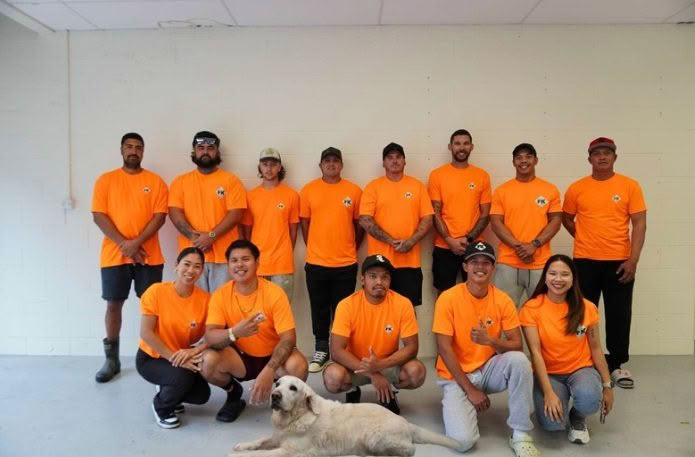
Drawing on 25 years of concrete industry experience, Mark Sugar founded Filokreto eight years ago as a Waikato-based specialist serving residential, commercial, and industrial clients across New Zealand.
The company quickly built a reputation for innovation and tackling complex projects.
But growth can be tricky. As the company was expanding, the foundations behind the scenes were beginning to crack—processes were inconsistent, knowledge was siloed, and the business was limiting its growth potential if it didn’t find a way to bring structure to the complexity.
Enter, Quanton. Partnering with Filokreto, the Quanton team has helped build a future-ready operating model that has already halved the company’s sales process time, streamlined operations, and positioned Filokreto for scalable, sustainable growth.
Filokreto’s frontline reputation as a leading Waikato concrete specialist was strong: hard work, quality workmanship, and an innovative approach in a crowded sector kept the lights on.
But behind the scenes, the business was struggling to keep up with its own success.
Without exaggeration, almost every key decision and every process within the business was tied to either founder Mark or Filokreto’s long-time administrator, Famela Maagad. New client details, active quotes, payroll reconciliation processes—much of this critical knowledge resided in key personnel’s heads, not systems.
Leads were tracked haphazardly (in Apple Calendars), and quoting methods were often inconsistent, heavily reliant on memory and experience. Client details were scattered across phones, emails, and files, there was no CRM system, no visibility of the pipeline, and, it follows, a constant scramble to keep up.
Employee details were duplicated across BrightHR, Excel, and Xero. Payroll involved laborious daily reconciliations between apps. Receipts were misplaced, and financial reporting lacked clarity. Admin had become a bottleneck, yet it was too critical to ignore.
On site, best practices weren’t standardised. Each worker would approach jobs differently, increasing the risk of rework, delays, or non-compliance with New Zealand’s strict building standards. Training new hires—essential in a labour-short industry—was slow and inefficient.
Requests for subcontractor quotes could come from anyone, using any method. Duplication, inconsistent details, and missed information were common. This led to wasted time and unpredictable pricing.
Mark and team had tried to standardise operating procedures themselves before—think sticky notes and whiteboard sessions—but the effort quickly stalled.
The final tipping point came during Filokreto’s Australian expansion. The project was a commercial success but an operational nightmare that highlighted the opportunities for operational enhancement.
“We were literally just surviving,” Mark recalls. “It was a mad scramble—on the phones, in the office, and on-site. Only I know how to do this, only Famela knows how to do that. Something had to change.“
The Solution: Building Stronger Foundations
“We researched several options in the market,” says Famela, “but our heart was with Quanton from the beginning because of their robotics and AI capabilities. That aligns with how we want to do things in the future.”
What sealed the decision however was Quanton’s proposal. “It was very well-defined and very well-explained,” says Famela. “We knew what the deliverables were, how they were going to achieve them, and what the expected outcome was. It gave us a lot of confidence.”
Quanton implemented a 12-week Operational Excellence programme, rooted in Lean principles and focused on practical, low-cost improvements using the systems Filokreto already owned: Monday.com, Xero, BrightHR, and Microsoft 365.
1. Mapping and Standardising Processes
Through detailed workshops, Quanton mapped Filokreto’s end-to-end processes—from lead capture to final invoicing. This exercise made inefficiencies visible and provided a framework for change. More importantly, it forced Filokreto to think beyond their current capacity.
“There was always this point that I would remind them of during the workshops,” says Tabatha Longa-Wood, Operational Excellence Consultant with Quanton and lead on the project. “I would say: ‘You have five or six projects per week now, but if you want to go to 20 to 30, how are you going to keep track of that? Can you scale this way?“
This constant challenge to think ahead became a cornerstone of the engagement. Every process was examined not just for current efficiency, but for how it would perform when Filokreto doubled or tripled in size.
2. Clarifying Roles and Accountability
Any ambiguity over “who does what” was replaced with clearly-defined task ownership. The Operations Manager took charge of subcontractor quoting, site leaders became responsible for final measurements and chargeable items, and management retained oversight of approvals. Documented job descriptions reinforced accountability.
3. Transforming Sales
Quanton’s approach to sales was one of the biggest wins. Monday.com was adopted as a simple but powerful CRM, providing the Filokreto team with:
- Pipeline board to track all leads and opportunities
- Standardised quoting form to capture consistent details
- Automated follow-ups to keep deals moving
The result? Radically streamlined and consistent quoting, zero lost leads, and a professional experience for clients.
4. Elevating Project Quality
To ensure consistent workmanship, Quanton worked with Filokreto to develop step-by-step Standardised Operating Procedures (SOPs) and “How-To” training videos.
Recognising that much of the workforce learns visually, the training content was designed with practicality in mind: simple, visual guides that made learning accessible to younger apprentices.
Quality checklists were embedded into Monday.com tasks, aligned with NZS 3109 and other recognised standards for concrete work in New Zealand construction.
5. Streamlining Admin and Finance and Optimising Resources
Administration burdens were reduced by consolidating employee master data, digitising receipts via the Xero app, automating recurring transactions, and simplifying payroll reconciliation, freeing up capacity and improving data accuracy.
Standardised loadout checklists, labelled storage, and a simple asset tracking board cut wasted time searching for tools and prevented double-booking of high-value equipment.
6. Embedding a Culture of Continuous Improvement
Weekly check-ins and continuous feedback sessions ensured buy-in from the team, and helped instil a culture of continuous improvement.
“We’ve now got a mindset of always asking ‘How could this work if we doubled in size?‘” says Famela. “We wanted clarity and accountability. Now every process has an owner, and we finally have a single source of truth.“
Quanton’s approach was pragmatic: no expensive new platforms, just smarter use of what was already there.
The Results: From Complexity to Clarity
The impact of Quanton’s programme has been immediate and measurable.
Sales efficiency has doubled
Filokreto halved its sales process time. Quotes are now thorough, consistent, and quickly delivered. Automated reminders and clear visibility mean no opportunity is missed.
“The sales process was literally cut in half,” says Mark. “It feels like a miracle.“
Faster onboarding, better retention
New hires can train with SOPs and videos, dramatically reducing the five-year amp-up time traditionally required for multi-skilled workers. In a labour-constrained industry, this is a critical competitive advantage.
Data-driven decisions
For the first time, Filokreto is tracking sales, project costs, and admin performance with pinpoint accuracy. Leadership has the data to make truly informed decisions about resourcing and expansion.
Clarity and confidence
With roles now clearly defined, staff know exactly who is responsible for each step. Processes continue smoothly even if a key person is away.
Famela describes the impact of that change succinctly: “I can finally take a holiday knowing the business will keep running.“
Improved client experience
Clients now receive faster quotes, clearer communication, and more timely updates via automation. The process feels more professional and reliable, strengthening client trust.
Scalable foundation
Processes are now designed to support 20–30 weekly jobs, not just the current workload. As Mark explains, “We had to think big—what happens when we triple our job volume? Now we have the structure to handle it.“
Cultural shift
Perhaps most importantly, Filokreto now sees continuous improvement as part of its DNA. Weekly progress reviews keep the team engaged, and standardisation has created a calmer, more confident workplace.
Looking Ahead
“With this foundation in place, we are future-ready,” says Mark.
“We want to help more people. But if the business is chaotic or messy in the process, we can’t scale. We know that if we standardise what we’re doing, that will give us the tools and the confidence to expand into new areas. When we can scale properly, we’ll be able to pay our people better and expand their knowledge in different ways too.“
The company is exploring further automation, robotics, and AI applications. International opportunities remain a key goal for the company and the team has the confidence to pursue them without fear of operational collapse.
“Mark is actually a visionary because he sees the potential for his business to grow,” says Tabatha.
“Most companies do the opposite—they grow too fast and then have to invest heavily to fix things later. But Mark went against the trend by identifying quite early on what he needs in order to get there, and organising the house so he can grow.”
“It wasn’t just about the processes. They’ve established a culture of continuous improvement. It’s the mindset. They’ve gone from reacting day-to-day to thinking strategically about how they are going to grow sustainably.“
Conclusion
From firefighting chaos to confident scalability, Filokreto’s forward-thinking transformation shows what’s possible when pragmatic technology meets disciplined process improvement.
By halving sales process time, reducing reliance on individuals, and embedding a culture of continuous improvement, Quanton has helped Filokreto turn ‘survival mode’ into a bonafide springboard for future growth.
General Disclaimer
The information in this document is intended for information purposes only.
While we make every effort to ensure that the material in this document is accurate and up to date (as at the date of publication), we do not guarantee, and accept no liability or responsibility of any kind (to the extent permitted by law) arising from or in connection with, the accuracy, reliability, currency or completeness of any material in this document.
The material in this document may be changed, improved, or updated without notice.
This document includes references to registered and unregistered trademarks that are the property of third parties, and that are used with the consent of the trademark owner or as expressly permitted by applicable law.
Date of publication September 2025
© Quanton Limited 2023
Except as expressly permitted by applicable law, no part of this document may be reproduced (or distributed) in any manner without prior consent.
All rights reserved.