

Case Study Results
- An initial Opportunity Assessment exercise involving Quanton and members from Toyota Finance New Zealand (TFNZ) customer services and fleet sales teams identified over 39,000 hours of potential benefit from automation and helped drive early engagement within the business.
- After delivering a pilot in 90-days, TFNZ has automated over 15 processes using UiPath RPA platform, reaping the benefits and giving almost 2,000 hours back to the business in 2019, while projecting a further 4,500 hours back to the business this year.
- A second UiPath software robot went live just before Christmas 2019, providing over 8,000 annual hours of additional automation processing capacity to the fleet team managing their rental portfolio.
About Toyota Finance New Zealand
- New Zealand’s largest captive finance company, TFNZ provides products and services, including consumer and small-business vehicle financing, vehicle leasing, and corporate fleet management services.
- Recently TFNZ added car-share subscription services to their portfolio, when they joined forces with the country’s largest car-share operator, CityHop. The demand for vehicle subscriptions – or vehicles-as-a-service – is increasing, which might indicate that the broader motor industry is preparing for a major shift.
Robotic Process Automation and Toyota New Zealand
- TFNZ wanted options to help the business scale, grow, and become more efficient without having to invest in large-scale, disruptive IT projects.
- Quanton says automation within TFNZ is not just about cost savings, with the very real potential for automation for cost avoidance and risk mitigation.
- Many people within the TFNZ Fleet team spend a considerable amount of time on transactional activities, like creating a quote for example – so this simple activity has been automated, to give more time to spend with customers rather than keying in data.
Introduction
When Anita Hogan, Applications Manager for Toyota Finance New Zealand (TFNZ), first spoke with New Zealand digital transformation services and business automation specialists Quanton about intelligent automation, she had one simple question: Could this technology work for us?
After an initial Opportunity Assessment, delivered by Quanton, identified over 39,000 hours potential benefit from automation – The answer was a resounding yes.
Within months of discussions beginning, TFNZ had its first Robotic Process Automation (RPA) pilot underway, and just six months after the pilot kicked off in March 2019, the company was managing their own full-scale RPA programme using UiPath RPA platform.
Since then, the company has automated over 15 processes, reaping the benefits and giving almost 2,000 hours back to the business in 2019, while projecting a further 4,000 hours back to the business in 2020.
Their agile-driven RPA programme has also brought the local office international attention.
In January 2020, TFNZ brought home the AOR (Americas & Oceania) regional Kaizen award in the company’s prestigious annual global competition.
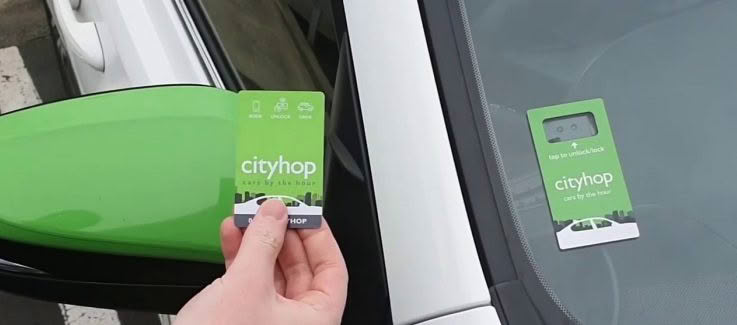
As New Zealand’s largest captive finance company, TFNZ provides a range of products and services, including consumer and small-business vehicle financing, vehicle leasing, and corporate fleet management services. More recently, TFNZ added car-share subscription services to their portfolio, when they joined forces with the country’s largest car-share operator, CityHop.
TFNZ, along with their Toyota counterparts globally, have a strong focus on Kaizen – the Japanese concept of continuous improvement through small, incremental changes.
That’s a concept that plays well with intelligent automation.
Russell Berg, Quanton’s General Manager for Product and Emerging Technology, explains: “Continuous improvement is very important for TFNZ, and RPA heavily links back to that for the reason you have a far deeper and richer level of data relating to processes actions and tasks. So now you can form a view with quantitative information on where the potential for improvement is and what benefit of improvement might be.”
Adds Anita: “In terms of our operational strategy, we have a global strategic directive to increase the efficiency of operations as well as digitising the entire customer experience.
“As a Financial Services organisation, transactional work is at the heart of what we do every day, and these activities have a direct impact on our customers, both consumer and corporate. Inherent in this is the fact that manual processes are prone to simple, yet potentially costly mistakes, and we wanted to remove that risk from the business.
“We needed to streamline and refine these processes while also planning for – and building – our future capabilities.
“There has always been a healthy tension between customising our existing systems and incorporating new technologies into the business. Any new software that we take on has to be able to integrate with our existing technology stack while also providing long-term opportunities for scale.
The company wasn’t keen to embark on any large-scale system upgrades or replacements; projects that typically consume resources for many years before any benefit is realised. The financial services industry is changing fast and TFNZ needed to keep up – and even get ahead.
Anita wanted options to help the business scale, grow, and become more efficient without having to invest in large-scale, disruptive IT projects.
“We were trying to find a balance between maintaining our core operations while also being able to innovate, scale, and drive tangible business value. We wanted to see results in terms of weeks, not months or years,” she says.
Disruption: Financial Services & Fintech
Market changes were also driving Anita’s desire for new efficiencies.
Customers, she notes, are becoming a lot more mature in how they navigate and consume financial services and products. “The fintech industry has made significant inroads in New Zealand over the past few years – customers now expect to be able to apply for finance online with a few clicks and receive funds within hours, or maybe even minutes. Fintech organisations are setting the gold standard in terms of slick, digitised customer experiences, and we need to make sure we can keep up with that speed of change”.
Indeed, TFNZ has found itself right in the middle of the change – it recently added car-share and subscription services to its portfolio via its CityHop partnership and that business is growing steadily. The demand for vehicle subscriptions – or vehicles-as-a-service – is increasing across all demographics and industries, which might indicate that the broader motor industry is preparing for a major shift. As Anita mentions, “we are in a great position to take advantage of our broad product offering while also leveraging our strong customer relationships. We just need to make sure we can scale and grow along the way”.
Research on Anita’s part quickly identified automation and RPA as one potential way to drive innovation and efficiency, and Quanton quickly came to the top of the list to talk to about the technologies.
“If you Google RPA NZ, Quanton comes out high on the list of search results, and they had already written a lot of papers on RPA which played a big part in building my RPA knowledge base.”
A chat with the team at Quanton quickly identified that the technology could work with virtually all systems.
But Anita wasn’t about to throw herself into a pilot without first gaining a greater understanding of the technology.
“Russell took a lot of time to meet with me and upskill me about what RPA is and what it does.
“Ultimately, we knew that I would have to go to executives and say ‘this is what we want to do’, and to have those conversations I needed to understand what we were getting into and what it meant for the business, for our systems, for our employees and so on.”

An Opportunity Assessment exercise involving Quanton and members from TFNZ’s customer services and fleet sales teams identified over 39,000 hours of potential benefit from automation and helped drive early engagement within the business. The Quanton and TFNZ team identified several potential processes for automation from this exercise.
“Our Customer Services team receives large volumes of requests every day,” Anita says.
“These are the frontline representatives of our business, operating the phones and emails, talking to customers, as well as actioning requests, which could be anything from updating addresses to changing direct debit details or running payments. The team themselves were very engaged and we believed that there was a lot of opportunity for automation within that space.”
Ultimately, however, it was the Fleet Sales team that provided the first processes for automation.
“Fleet Sales is a complex part of our business, and they deal in extremely large volumes of contracts and requests. They are always welcoming of solutions that will make it easier for them to spend less time on admin and more time face-to-face with customers.
Many people within the Fleet team spend a considerable amount of time on transactional activities, but it’s not necessarily value-accretive work for a sales team. So, we thought, let’s remove the transactional work. It could be something very straightforward, like creating a quote for example – every time our customers want finance options, we run multiple quotes to show all variables. That’s a simple activity that, if automated, could give us a lot more time to spend with customers rather than keying in data.”
As a financial services company, TFNZ has extremely rigorous security protocols – before the intelligent automation solution could go live within the company’s architecture, it needed to meet 52 security requirements.
“It demonstrated that the technology could work in highly compliant and highly stringent environments with the toughest standards, ranging from security to fail-over,” Russell says.
The project was signed off on the last day before Christmas break 2018. Berg remembers: “In the final presentation, the TFNZ Managing Director said, ‘It sounds great, but don’t tell me I have to wait two years now to get this’. “I said no, give us 90 days, and your pilot will be live.” “It was a little bullish, but quite typical for RPA projects.” The pilot, featuring Fabio – the ‘hunky’ servant robot – went live in March.
Engaging the Business
“We were quite adamant in early days that we wanted work with the willing. The Fleet team needed help in taking away some of their mundane transactional work. They came to us and asked for help at the same time we were building up the RPA capability so that worked well for us,” Anita says.
“In other areas, the strategy was to work with those who were enthusiastic or with anyone that had a problem they needed help solving. They, in turn, would talk to their teammates about how good the experience was and, over time, more and more people came to us asking about how they could get involved in automating some of their work.
“We didn’t want to force automation on any single team and say this is what’s happening you need to come along on the journey. We knew that if we managed the RPA programme well, people who would promote us to their teammates.”
Automating Out Risk
Russell says automation within TFNZ isn’t just about cost savings, with the very real potential for automation for cost avoidance and risk mitigation.
“One area with a big benefit is a process involving health and safety.
“Basically, with a leased vehicle if a driver doesn’t bring it in for scheduled servicing, the lease company needs to be notified, because this is now a health and safety issue.
“It’s an important area, because if that car is involved in an accident and the accident is found to have been caused by something that could have been prevented – say replacing the brake pads for example – the lease company could be liable.
“TFNZ shared with us that there is already one case in New Zealand that has gone to court with this exact scenario, and it had serious ramifications for the lease provider.”
While TFNZ haven’t yet automated that process, Russell says it highlights the potential for cost avoidance and risk mitigation using automation.
“There’s no possible way to do that sustainably without automation.”
For Anita, there’s still plenty to be achieved within the business.
“The message I’m putting back to business now is that this doesn’t stop with us identifying processes and automating them. There is still a lot more we can achieve, and there are more technologies that sit alongside RPA that can take this to the next level.
“We’re not at the end of the journey. We’ve just completed step one and there is a lot more to do.”

General Disclaimer
The information in this document is intended for information purposes only.
While we make every effort to ensure that the material in this document is accurate and up to date (as at the date of publication), we do not guarantee, and accept no liability or responsibility of any kind (to the extent permitted by law) arising from or in connection with, the accuracy, reliability, currency or completeness of any material in this document.
The material in this document may be changed, improved, or updated without notice.
This document includes references to registered and unregistered trademarks that are the property of third parties, and that are used with the consent of the trademark owner or as expressly permitted by applicable law.
Date of publication August 2022.
© Quanton Limited 2022
Except as expressly permitted by applicable law, no part of this document may be reproduced (or distributed) in any manner without prior consent.
All rights reserved.