
1.0 Applying Robotic Process Automation in Hutt Valley DHB
Robotic Process Automation has been successfully applied to a New Zealand District Health Board (DHB), demonstrating its ability to deliver real value reliably.
Hutt Valley DHB’s Robotic Process Automation (RPA) journey began in 2016. Demand to provide higher levels of clinical, administrative support was stretching current resourcing. The opportunity was to find a technology solution that could reduce the manual effort while working within the existing complex systems and architecture.
In July 2016, Robotic Process Automation was identified as a possible solution. Following an evaluation, a pilot began in November. The pilot was designed to further explore the benefits of the Blue Prism RPA solution and its practical implementation in the DHB.
Most importantly the pilot was designed to realise immediate value, specifically releasing time back to clinical support staff and improve processing quality.
As a critical process, e-referrals was identified as a suitable candidate where RPA could be applied with the potential to realise immediate value. This inefficient manual process was chosen for the pilot because it requires human interaction with systems that were not readily directly connectable by alternative integration methods. This process was also selected because of the highly repetitive rules-based, and it was considered a relatively straightforward process based on the number of target systems that the process primarily interacts with (Concerto and WebPAS).
2.0 Robotic Process Automation Solution Overview
The current process is initiated when general practitioners (GPs) create an e-referral in a Patient Management System (PMS). Back-end integrations and automated workflows classifythe entry and assign it to a specialist service queue in Concerto.
From the work queue, e-referral registration and processing require manual administration to complete the registration in two primary systems (Concerto and WebPAS). The process concludes with the distribution of referral letters.
Figure 1: e-Referrals end-to-end process overview
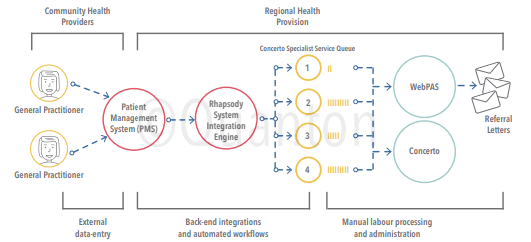
Figure 1: Shows the workflow and system overview, and delineation of labour for the e-referrals process.
Although the e-referrals is ultimately an end-to-end process, for the purposes of automation it was separated in two subprocess defined as e-referral registration and e-referral processing. Furthermore, to reduce complexity, the pilot programme only automated a sub-set of six clinical services out of the full suite of clinical services which patients could be referred for. e-Referrals for the remainder of clinical services continues to be processed manually.
Following a pre-defined RPA delivery methodology and comprehensive testing, the pilot was delivered into the live production environment in December 2016.
e-Referral Registration Overview
The current process receives e-referrals and automatically assigns them to a specialist work queue in Concerto. Clinical administrators collect referrals and manually complete the registration in two primary Hutt Valley DHB systems (Concerto and WebPAS). Updates are also made to the National Health Index via WebPAS. The manual administration process comprises of 37 individual steps.
The time taken to complete a single registration manually ranges from 5-10 minutes. Assuming the average time taken to complete a transaction is 7 minutes and 30 seconds, the impact on the labour force equates to over eight hours of skilled manual labour being consumed daily to complete this processA .
e-Referral Registration Robotic Automation Solution
In this example, Robotic Process Automation is applied to automate the collection of e-referrals from specialist service queues in Concerto and complete the registration in target systems WebPAS and Concerto.
The Robotic Automation of this process design means that the process is scheduled to run automatically at 6:00 pm daily, processing any registrations found autonomously and unattended.
To process each registration the RPA solution opens target systems, searches for unregistered referrals under pre-defined services, completes validation checks, updates any demographic data and creates the referral record. For all processes successfully concluded, the status of the referral is then updated in Concerto.
The solution has built-in business rules to manage scenarios where information is missing, or incorrect information evident. Any registrations which can’t be completed based on the business rules applied, or system exceptions, are referred to the human workforce for assessment via an exception report.
Once the process is complete, a report is automatically sent to target recipients within Hut Valley DHB. Audit logs are created for each action taken, providing staff with full auditability for all referrals which are completed by Robotic Process Automation.
Figure 2: Robotic Automation solution overview for e-referrals registration process
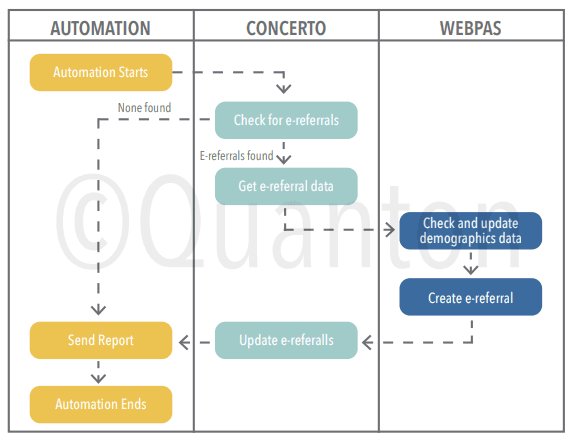
Figure 2: Shows an overview of the Robotic Automation solution for the e-referrals registration process.
A: Processing data obtained from Blue Prism shows on
average 67 daily transactions were processed for the
period February 1st, 2018 through and including April
30th, 2018. Assuming 7 minutes and 30 seconds average processing time per e-referral (registration) equates to 8.38 manual processing hours ((7 minutes and 30 seconds per transaction x 67 daily transactions = 502.5 minutes daily) 502.5 minutes / 60 minutes = 8.38 hours on average of manual processing time daily).
e-Referrals Processing Overview
The process is a follow-on action from the registration process completing the end-to-end processing of an e-referral including additional changes to primary systems, specifically WebPAS and includes printing referral letters for distribution. The time taken to complete a single registration manually ranges from 3-7 minutes. Assuming the average time taken to complete a transaction is 5 minutes, the impact on the labour force equates to over four hours of skilled manual labour being consumed dailyB .
e-Referral Processing Robotic Automation Solution
Robotic Process Automation is used to automate the final processing of e-referrals once they have been registered in Concerto and WebPAS and is scheduled to run automatically once daily at 6:00 pm.
To process each referral, the Robotic Automation opens the primary target system (Concerto) and identifies all outstanding referrals under pre-defined services and status, i.e. reviewed or prioritised. Referrals are then updated in WebPAS by completing validation checks, updating all required records and printing referral letters. For all processes successfully concluded, the status of the referral is then updated in Concerto.
Any e-referrals which can’t be processed based on the business rules applied, or system exceptions, are referred to the human workforce for assessment via an RPA generated report.
Once the process is complete, a report is automatically sent to target recipients within Hutt Valley DHB. Audit logs are created for each action taken, providing staff with complete auditability for all referrals which are completed.
Figure 3: Robotic Automation solution e-Referrals Processing overview
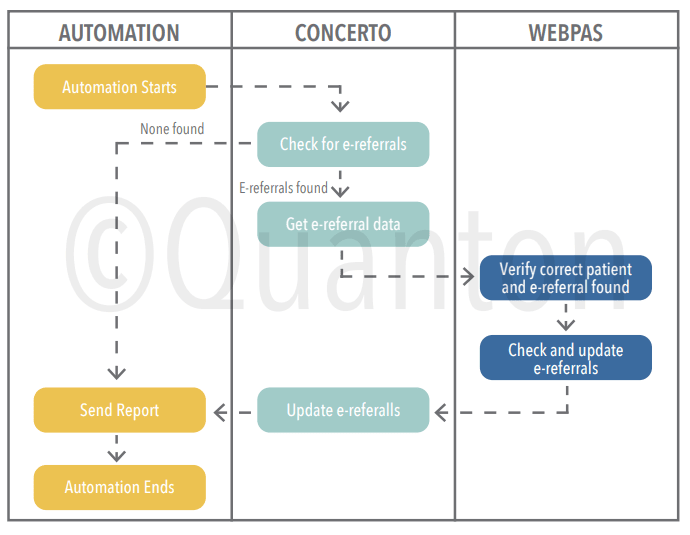
Figure 3: Shows an overview of the Robotic Automation solution for the e-referrals processing process.
B: Processing data obtained from Blue Prism shows on average 51 daily transactions were processed for the period February 1st, 2018 through and including April 30th, 2018. Assuming 5 minutes average processing time per e-referral (processing) equates to 4.25 manual processing hours ((5 minutes per transaction x 51 daily transactions = 255 minutes daily) 255 minutes / 60 minutes = 4.25 hours on average of manual processing time daily).
3.0 Pilot Results
The pilot delivered immediate benefits to HVDHB, providing on average two hours and fifty minutes (combined benefit) back to the organisation daily.
Table 1: Robotic Process Automation Pilot Processing Summary‘
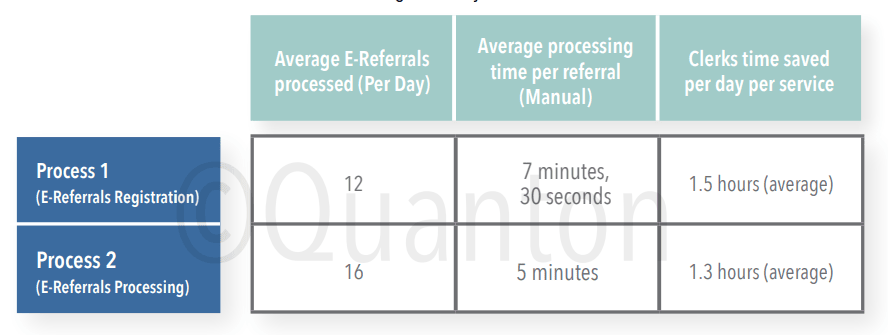
Table 1: Shows the average e-referrals processed daily during the pilot period and the resulting ‘hours back to the organisation’.
During the pilot (December 23rd, 2016 – March 10th, 2017) the daily average volume of e-referrals addressed through automation was initially low-volume because of the limited number of clinical services which were included in the Robotic Automation pilot scope.
During the pilot, over 1,200 e-referral registrations and processing transactions were successfully completed releasing over 127 hours back to the organisation.
The benefit delivered to the business is estimated as a combination of the average manual processing time and the number of registration or processing transactions successfully completed. Respectively the registration and the processing Robotic Automation Solutions delivered 71 hoursC and 56 hoursD back to the organisation.
The success rate of straight-through processing of the Robotic Automation solution was over 83% for the registration process and over 75% for the processing process. A level of exceptions caused by business rules and system exceptions were expected, and formal processes were in place, re-directing these cases to the human workforce for individual assessment. The impact of exceptions referred to the human workforce is accounted for in the estimates of hours returned to the organisation.
Note: Limited improvements were achieved regarding the processing speed of transactions. Robotic Process Automation is promoted as being able to execute processes on average 60% faster than a human worker. Intentionally, software robots were set to operate at the minimum required speed to work within the constraints of the target system architecture i.e. not cause target systems to crash or hang resulting in system errors.
C: Total transactions successfully completed through autonomous and unattended automation (accounting for exceptions referred to the human workforce for manual assessment) 568. ((568 transactions x average processing time 7 minutes and 30 seconds = 4,260 minutes over the course of the pilot.) (4,260 minutes / 60 = 71 hours) Average benefit to the organisation over the course of the pilot is 71 hours for e-referrals registration process.
D: Total transactions successfully completed through autonomous and unattended automation (accounting for exceptions referred to the human workforce for manual assessment) 680. ((680 transactions x average processing time 5 minutes = 6,400 minutes over the course of the pilot.) (3,400 minutes / 60 = 56.7 hours) Average benefit to the organisation over the course of the pilot is 56 hours for e-referrals registration process.
e-Referral Robotic Process Automation Summary
Table 2: E-Referral Robotic Process Automation Pilot Summary
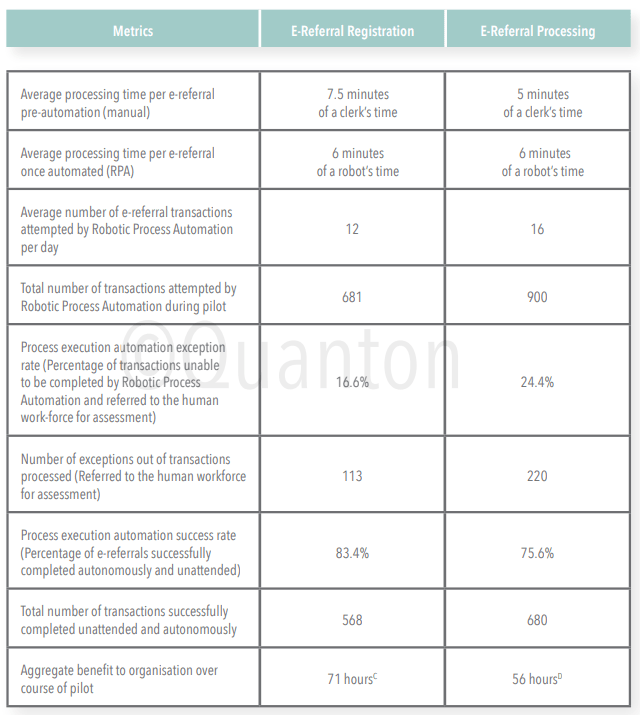
Table 2: Shows the summary of results for the e-referrals registration process and processing process during the pilot period.
C: Total transactions successfully completed through autonomous and unattended automation (accounting for exceptions referred to the human workforce for manual assessment) 568. ((568 transactions x average processing time 7 minutes and 30 seconds = 4,260 minutes over the course of the pilot.) (4,260 minutes/ 60=71 hours) Average benefit to the organisation over the course of the pilot is 71 hours for e-referrals registration process.
D: Total transactions successfully completed through autonomous and unattended automation (accounting for exceptions referred to the human workforce for manual assessment) 680. ((680 transactions x average processing time 5 minutes = 6,400 minutes over the course of the pilot.) (3,400 minutes / 60 = 56.7 hours) Average benefit to the organisation over the course of the pilot is 56 hours for e-referrals registration process.
On conclusion of the pilot, a detailed review was completed which included areas for improvement or where there were challenges during the pilot period. These were to be expected and have highlighted nothing for concern about expanding the use of RPA within Hutt Valley DHB.
1. Project Management and Governance
2. Planning and management of time and scope
3. Testing methodology and test practice
4. HVDHB systems
a. Outages related to WebPAS and Concerto (planned and unplanned)
b. System changes pertaining to WebPAS and Concerto
c. Software Robot infrastructure speed & performance (the pilot used the minimum required)
5. Risk assessment and expectation management
6. Business risks and issues
Expected intangible benefits which are harder to provide reporting on have included improvements to processing quality, specifically all processes completed through automation are 100% compliant to regulatory and process requirements and are 100% accurate avoiding the effects of human error. These aspects provide further unmeasurable benefit through the avoidance of ‘re-working’ or regulatory risk exposure.
As an unexpected benefit, advanced analytics and newly available data have increased transparency, reporting and governance.
As part of the pilot considerable reporting and auditing capability was implemented providing increased levels of data analytics and reporting at a process and individual transaction basis. Every step of every process is recorded through an audit logging system demonstrating that Robotic Process automation (RPA) can provide health organisations with a level of control, visibility and auditability that is exceptionally higher than what it is currently possible through manual processing.
This includes reporting not only of how and why successfully completed processes were performed, but what the causes of exception cases referred to the human workforce were enabling the opportunity for advanced process improvement. These exceptions were categorized as Business exceptions and System exceptions providing a much granular level of information than previously available.
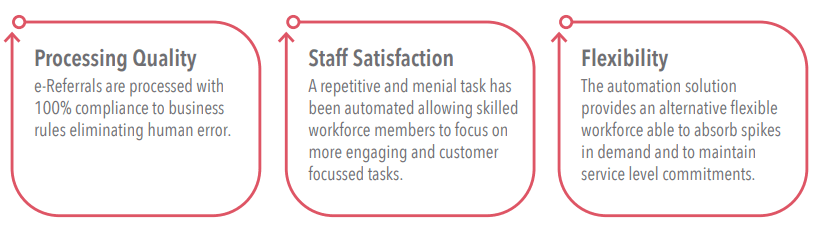
The pilot was without a doubt a success. Those involved in the pilot strongly believe that process automation will provide significant benefit to Hutt Valley DHB.
Based on the early success of the pilot programme the decision was made to retain the application of Robotic Process Automation for the e-referral processes while a broader planning process was undertaken to explore the extended use of automation within Hutt Valley and associated DHBs.
Process Capture
A significant unanticipated benefit is the formal capture and retention of process knowledge.
Previously, accumulated process knowledge was held by experienced staff. People leaving presented the risk of knowledge and I.P. loss.
Knowledge transfer occurred through training however training required time investment to deliver and an allowance for newer staff members to become proficient.
Once processes are captured through Robotic Process Automation, implicit process knowledge is captured in detail and perpetually retained by the organisation. Furthermore, the impacts of staff transitioning in and out of roles no longer has a negative impact on temporary efficiency
Why Blue Prism Was Selected
Hutt Valley DHB selected Blue Prism, a world-leading Robotic Automation Technology solution.
| Global use case references in significant public health organisations.
| Rated as having the highest governance, security and centralised control of leading solutions by independent research sources.
| Provision of locally based expertise to provide implementation and on-going technical support.
| Low risk, rapid system integration ability.
4.0 Extended Application Benefits
The e-referrals process has now been operating in full production for over twelve months.
By way of immediately increasing the benefit of automation, HVDHB extended the application of the e-referral process to include additional clinical services beyond the sub-set initially selected. As at May 2018, twenty-two clinical services are now addressable through Robotic Automation.
Based on system data, for the three-month period ended April 30th, 2018, Hutt Valley DHB received on average 67 e-Referrals per day and over 5,900 registrations during the period Based on the current volume of referrals over 24,000 referrals are expected in the 2018 – 2019 budget year. Of the total registrations, on average 51 daily or over 18,000 annually will be successfully processed by unattended automation.
The end-to-end task of processing an e-referral continues to be viewed in two components; the registration of the referral and the processing of the referral. The time required to complete the registration process manually ranges from 5-10 minutes for the registration and 3-7 minutes for the processing.
The end-to-end process of completing registrations and then processing successful registrations is estimated to require over 4,600 hours annually, or the equivalent of 2-2.5 full-time employeeE equivalents.
Notes:
1. The impact of exceptions referred to the business for manual processing is considered in the estimates for annual benefit, i.e. hours returned to the organisation.
2. Even with software robots completing the end-to-end process, the human workforce is completing auxiliary tasks, for example,confirming data quality.
The Results
Using Robotic Automation, 72% of e-referral registrations and 77% of all processing is completed autonomously and unassisted1 . The remaining administration is referred to the human workforce because of either system or business exceptions which require further assessment.
Based on average transaction volumes and current success and exception rates, the Robotic Process Automation solutions have returned on average six hours back to the human workforce daily for registration process and three hours for the processing process.
Table 4: e-Referral Registration and Processing Robotic Automation 3-Month Summary
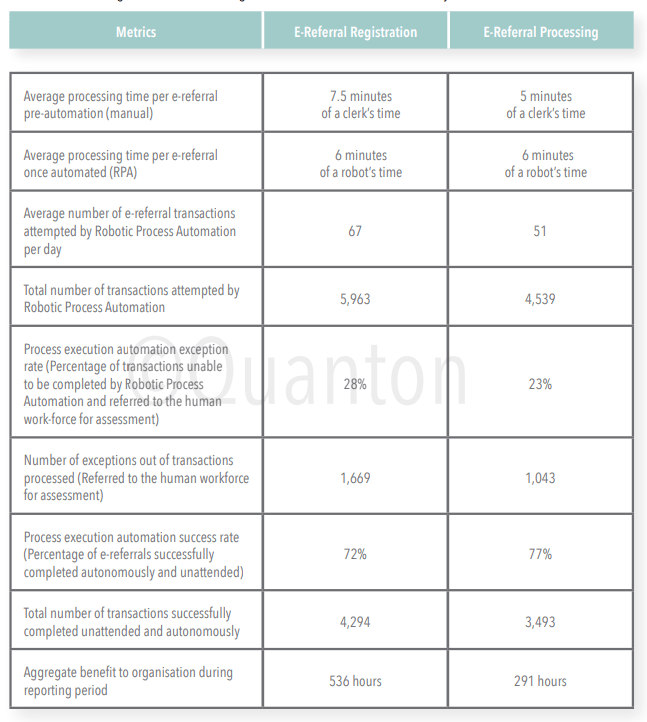
The estimated annual benefit is over 3,300 hoursF returned to the business.
This estimate is based on the replacement of human involvement in administrative tasks and is calculated from the combination of average daily transaction volumes and average estimated processing time (manual processing) of 7 min, 30 secs for e-referral registrations and 5 min for e-referral processing.
The time given back to the business can now be applied to higher orders tasks that enhance patient care and clinical outcomes.
Re-iterating a point made previously, the human workforce is not completely discounted from the end-to-end process. Even with software robots completing the end-to-end process, the human workforce is completing business exceptions and tertiary tasks, for example, confirming data quality.
5.0 The Future of Robotic Process Automation at Hutt Valley DHB
Following a comprehensive review and planning exercise the application of Robotic Process Automation will be extended within HVDHB and expanded to include 3DHB (Initially focussing on Capital & Coast DHB and then Wairarapa DHB in the future).
The expansion of Robotic Automation is planned to occur on a process by process basis emphasising return on investment (ROI). The proposed expansion will happen through outsource partner capability for delivery, management, support and maintenance.
As an initial step, HVDHB completed a strategic Opportunity Assessment. This process, achieved through external consultancy, was designed to provide both HVDHB and CCDHB with comprehensive and quantifiable information to support strategic decision making. A key advantage of this process was promoting broader education and awareness within target business areas and understanding how to view processes from an internal perspective.
The output was a prioritised pipeline of processes suitable for automation and validation of the potential benefit to the organisation concerning hours back to the business and financial return on investment relative to the cost of automating processes.
The Opportunity Assessment assessed eight processes for automation and identified over
$1.5 million in possible benefit.
Table 5: Opportunity Assessment Summary
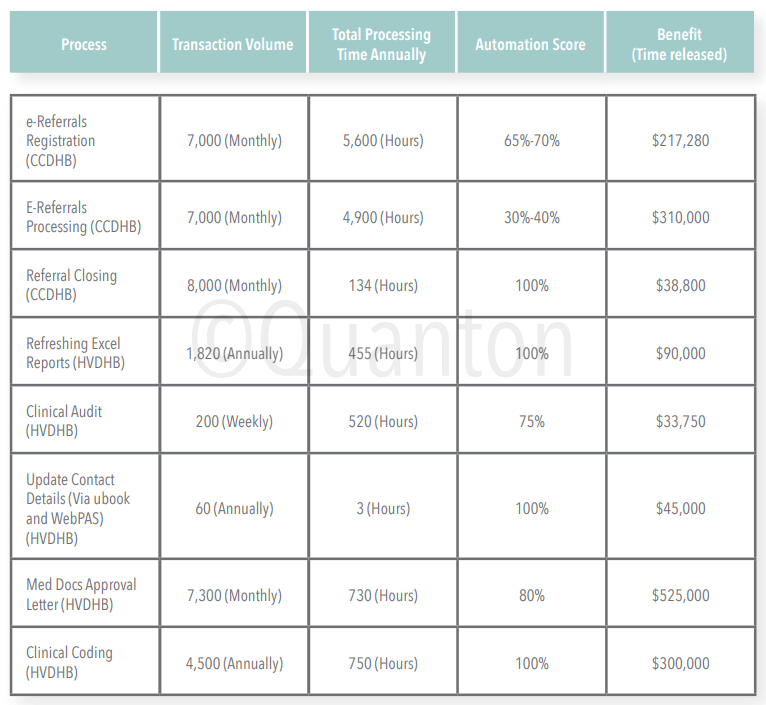

Table 5: Shows the summary of results as an output of the Opportunity Assessment Process completed by Quanton.
Note: Estimated benefit is the value of time released based on an assumed average hourly rate for staff time, not direct savings. Benefit as a financial value is used to support business case and investment decision making.
The Opportunity Assessment provided a pipeline of eight processes suitable for automation based on factors such as the presence of structured data, the level of cognitive decision making required and the number of business variations.
Once automated, the eight processes could release over 9,800 hours back to the organisation.
The eight processes reported collectively require over 13,000 manual labour hours annually. Assuming a 75% success rate for unattended and autonomous automation, the potential is to release over 9,800 hours annually back to the business.
Extending the application of Robotic Process Automation on a process by process basis, each process is required to demonstrate a positive return on investment. A dollar benefit was derived by multiplying the annual cost to run a process (Average subject matter expert salary x number of processing hours annually) with the automation score to enable financial benefit measurement. This process resulted in a total estimated annual benefit of over $1.5 million (value of time released to the business) with the benefit for individual processes ranging from $38,000 up to $525,000.
At the time of writing this paper, one process, Refreshing Excel Reports is currently nearing completion of development for application in HVDHB and a current workstream is focussing on enhancing the architecture and technology configuration to optimise the application of Robotic Process Automation, further increasing benefits through potential increases to processing speed.
6.0 End Notes
Estimated Calculations
Where estimates have been created from data points, overviews of the calculations have been published to ensure context and transparency.
A: Processing data obtained from Blue Prism shows on average 67 daily transactions were processed for the period February 1st, 2018 through and including April 30th, 2018. Assuming 7 minutes and 30 seconds average processing time per e-referral (registration) equates to 8.38 manual processing hours ((7 minutes and 30 seconds per transaction x 67 daily transactions = 502.5 minutes daily) 502.5 minutes / 60 minutes = 8.38 hours on average of manual processing time daily).
B: Processing data obtained from Blue Prism shows on average 51 daily transactions were processed for the period February 1st, 2018 through and including April 30th, 2018. Assuming 5 minutes average processing time per e-referral (processing) equates to 4.25 manual processing hours ((5 minutes per transaction x 51 daily transactions = 255 minutes daily) 255 minutes / 60 minutes = 4.25 hours on average of manual processing time daily).
C: Total transactions successfully completed through autonomous and unattended automation (accounting for exceptions referred to the human workforce for manual assessment) 568. ((568 transactions x average processing time 7 minutes and 30 seconds = 4,260 minutes over the course of the pilot.) (4,260 minutes / 60 = 71 hours) Average benefit to the organisation over the course of the pilot is 71 hours for e-referrals registration process.
D: Total transactions successfully completed through autonomous and unattended automation (accounting for exceptions referred to the human workforce for manual assessment) 680. ((680 transactions x average processing time 5 minutes = 6,400 minutes over the course of the pilot.) (3,400 minutes/ 60=56.7 hours) Average benefit to the organisation over the course of the pilot is 56 hours for e-referrals registration process.
E: Based on system data for the period February 1st, 2018 through and including April 30th, 2018 we estimate that 24,455 e-referrals will be registered, and 18,615 e-referrals will be processed autonomously and unattended. Assuming 7 minutes and 30 seconds (registration) and 5 minutes (processing) average processing time per e-referral equates to 4,608 manual processing hours annually ((7.5 minutes per transaction x 24,455 annual transactions = 183,412.5 minutes annually) + (5 minutes per transaction x 18,615 annual transactions = 93,075 minutes annually) (276,487 minutes combined) 276,487 minutes / 60 minutes = 4,608 hours on average of manual processing time annually). On average a FTE equivalent provides 1,920 hours annually (48 working weeks x 40 hours weekly = 1,920 annually). 4,608 annual processing hours / 1920 FTE hours=2.4. Processing now completed through unattended and autonomous automation would require 2 – 2.5 FTE equivalents.
F: Registration process – (7.5 minutes per transaction x 24,455 annual transactions = 183,412.5 minutes annually). Success rate for autonomous and unattended completion is 72%. ((183,412.5 * 72% = 132,057 minutes) 132,057 / 60 minutes = 2,200.95 hours) Annual estimated automation benefit for e-referrals registration is 2,200 hours. Processing process – (5 minutes per transaction x 18,615 annual transactions = 93,075 minutes annually). Success rate for autonomous and unattended completion is 77%. ((18,615 * 77% = 71,667.75 minutes) 71,667.75 / 60 minutes = 1,194.5 hours) Annual estimated automation benefit for e-referrals registration is 1,194 hours. Total estimated annual benefit to business is 3,394.5 hours.
General Disclaimer
The information in this document is intended for information purposes only.
While we make every effort to ensure that material in this document is accurate and up to date (as at the date of publication below), we do not guarantee, and accept no liability or responsibility of any kind (to the extent permitted by law) arising from or in connection with, the accuracy, reliability, currency or completeness of any material contained in this document.
The material in this document may be changed, improved, or updated without notice. This document includes references to registered and unregistered trademarks that are the property of third parties, and that are used with the consent of the trademark owner of as expressly permitted by applicable law.
Date of Publication: September 2018
© Quanton Limited 2018
Except as expressly permitted by applicable law, no part of this document may be reproduced (or distributed) in any manner without prior consent.
All rights reserved.